
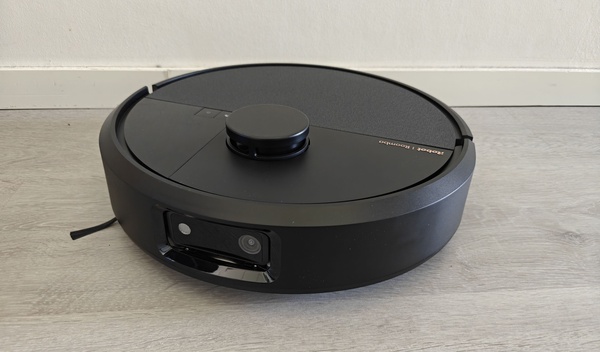
From the new product line, we put one of the most interesting cases to a long test, the Roomba Plus 505 Combo, christened with a confusing name monster, which, to avoid any confusion, also bears the name Roomba 505 Combo+.
This is a robot vacuum that mops floors with rotating mop pads, intelligently avoids obstacles with the help of a camera, empties its own dustbin, and washes its own mops. In other words, a direct answer to the currently most popular category of robot vacuums.
As is our custom, we put the new product to a user test lasting about six months, where the robot was the only tool responsible for the cleanliness of the apartment's floors throughout our test period. Conveniently, the test also fell in the middle of the Nordic winter, meaning that grit, slush, and various other dirt were carried indoors with shoes, hindering Roomba's work.
So, let's find out how the Roomba 505 Combo+ performed its task..
Table of contents
- Appearance and functions
- Technical specifications
- Phone app
- Usage
- Obstacle Avoidance
- Cleaning Result
- Roomba's situation..?
- Summary
- Alternatives
- Pros
- Cons
- Stars
Appearance and features
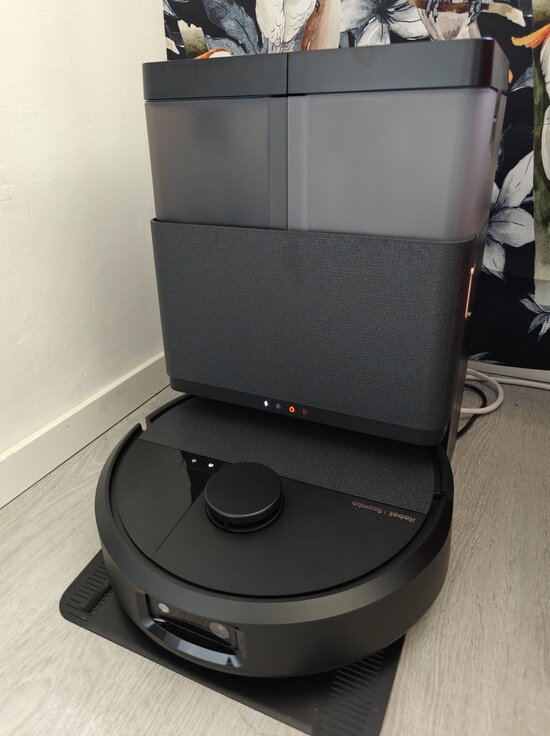
Viewed from the front, the Roomba 505 Combo+ looks like a completely ordinary robot vacuum, but therein lies one significant change in Roomba's new product line: Roomba models have not previously had a LiDAR light radar on top of the robot; instead, the company's robots have navigated in other ways.
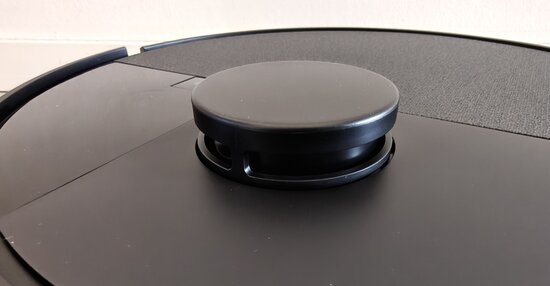
Now, this has moved in line with all other robot vacuum manufacturers. It should be noted that the Roomba 505 Combo+ is by no means the only Roomba model that uses LiDAR, but it is one of the first.
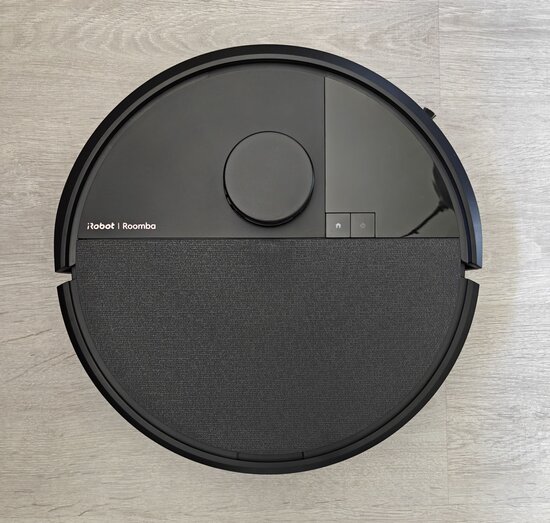
Viewed from above, the robot is also very conventional: a round disc with two physical buttons. Pleasingly, most of the robot's surface is textured plastic, not glossy plastic, as in most other robot vacuums. Glossy robots are nice-looking in themselves - for a moment. Until dust and dirt start accumulating on them, after which they constantly look a bit untidy.
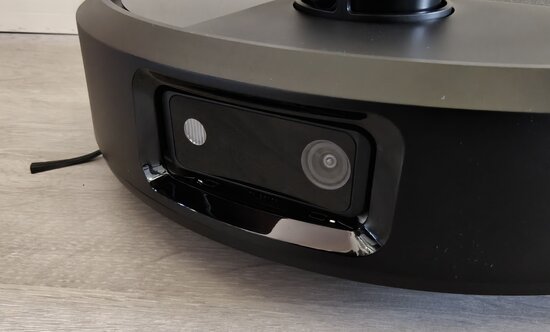
And of course, the robot also has a camera, which is used for identifying (and avoiding) obstacles left on the floor.
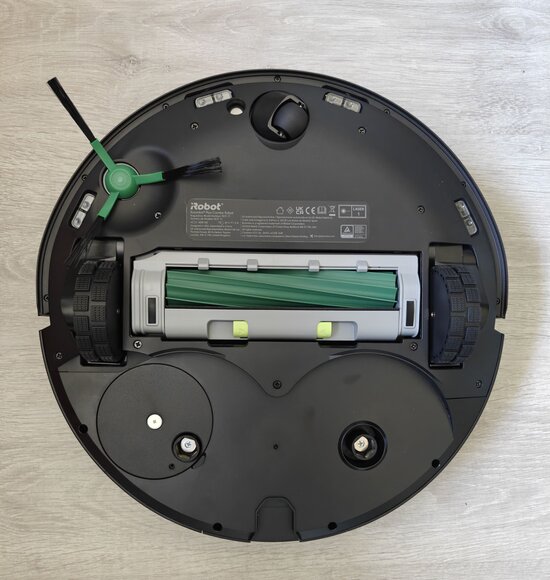
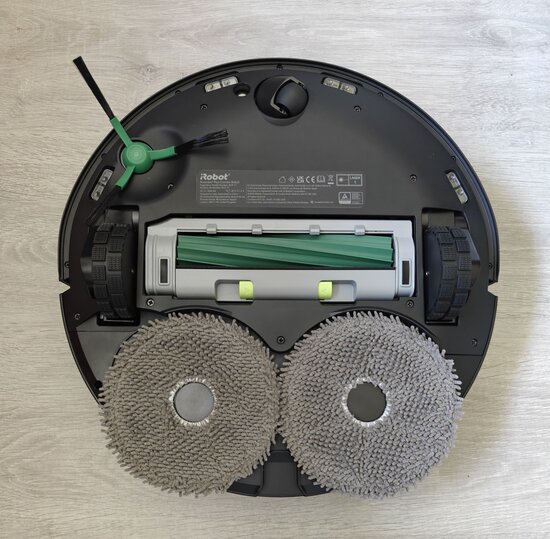
No major surprises are revealed from the bottom: there are two rotating mop pads, one of which can extend further if necessary when mopping along walls.
Perhaps the only cause for wonder is that Roomba uses only one cleaning roller - as the company has become known specifically for Roombas usually always using two counter-rotating cleaning rollers, which generally makes vacuuming more effective.
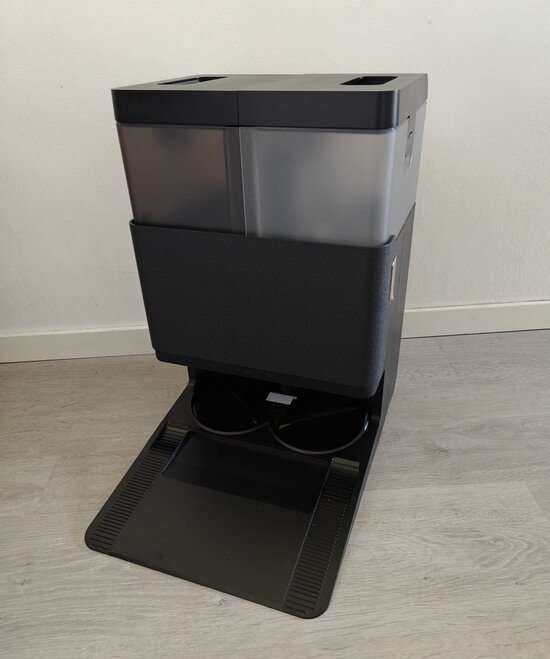
The Roomba 505 Combo+'s dock is also a very typical charging dock for a higher-end modern robot vacuum. And the dock has the same problems as other modern robot vacuum docks: it is so large that it cannot be neatly hidden, for example, under a sofa.
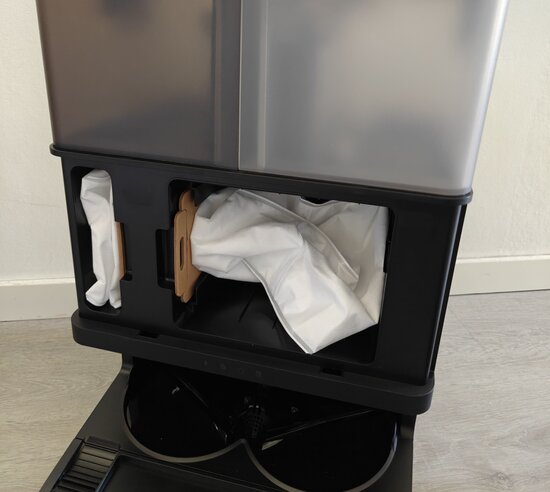
The dock contains a dust bag into which the robot automatically empties the debris from its internal dustbin at the end of cleaning. The dust bag must be replaced with Roomba's own dust bag when it fills, just like in traditional vacuum cleaners.

For mopping support, both dirty and clean water tanks are available. At the beginning of cleaning, the mop pads are moistened with clean water, and at the end of cleaning, the mop pads are automatically cleaned with clean water - and the dirty water is sucked from the washing tray into its own tank. The water tanks are slightly small compared to most competitors, only 2.3 liters in size.
Technical specifications
| Suction power: | 7000 Pa |
| Navigation: | LiDAR mapping + camera-based obstacle detection |
| Mopping method: | Two rotating mopping pads |
| Mop lifting: | Detects carpets, lifts mops automatically |
| Battery capacity: | 5000 mAh |
| Battery life: | approx. 90-180 min |
| Charging time: | approx. 180 min |
| Robot width: | 35 cm |
| Robot height: | 10.6 cm |
| Weight: | approx. 4.3 kg |
| Threshold climbing: | approx. 2 cm |
| Dock functions: | automatic emptying, mop washing and drying |
| Dust bag (in dock): | approx. 2.5 liters |
| Clean water tank: | 2.3 liters |
| Dirty water tank: | 2.3 liters |
| Dock dimensions: | 45 x 34.4 x 47 cm |
| Dock weight: | approx. 6.3 kg |
| Voice assistants: | Amazon Alexa, Google Assistant, Apple Siri |
| Maps: | support for multiple floor plans, can be used on multiple floors; restricted areas; room-specific control |
| Filter: | HEPA / fine dust filter |
| Price: | at the time of review, approximately €500 / $500 |
Phone application
The smartphone application used by iRobot has undergone many changes over the past year, and in fact, newer robots, such as the Roomba Plus 505 Combo we tested, have switched to using their own Roomba app, instead of the old iRobot Home app.
At the same time, the company has clearly tested and experimented with various changes to make controlling the robot vacuum as clear as possible for the average consumer. The views have changed so much that sometimes keeping up with the app's logic has been a bit challenging.
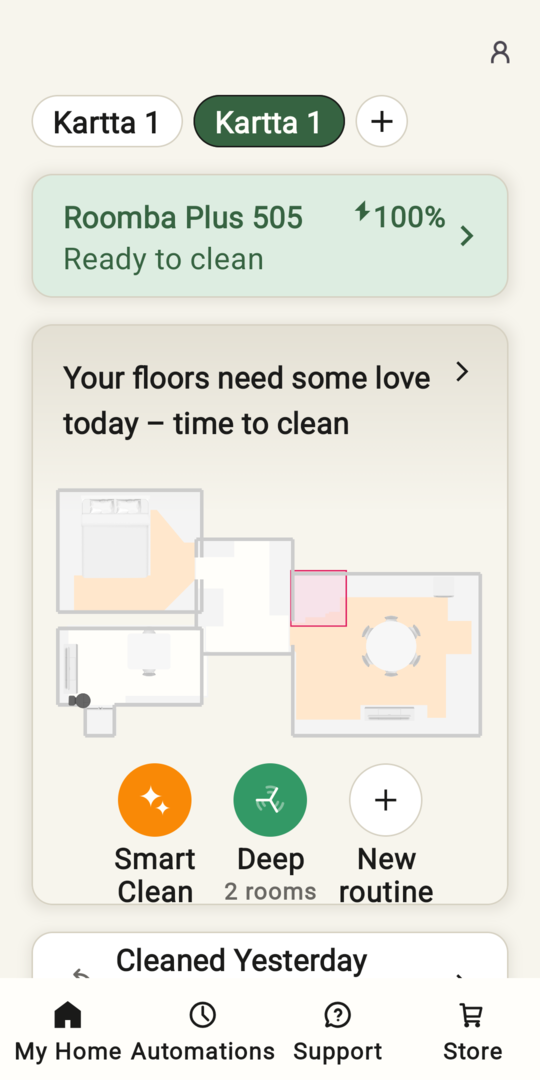
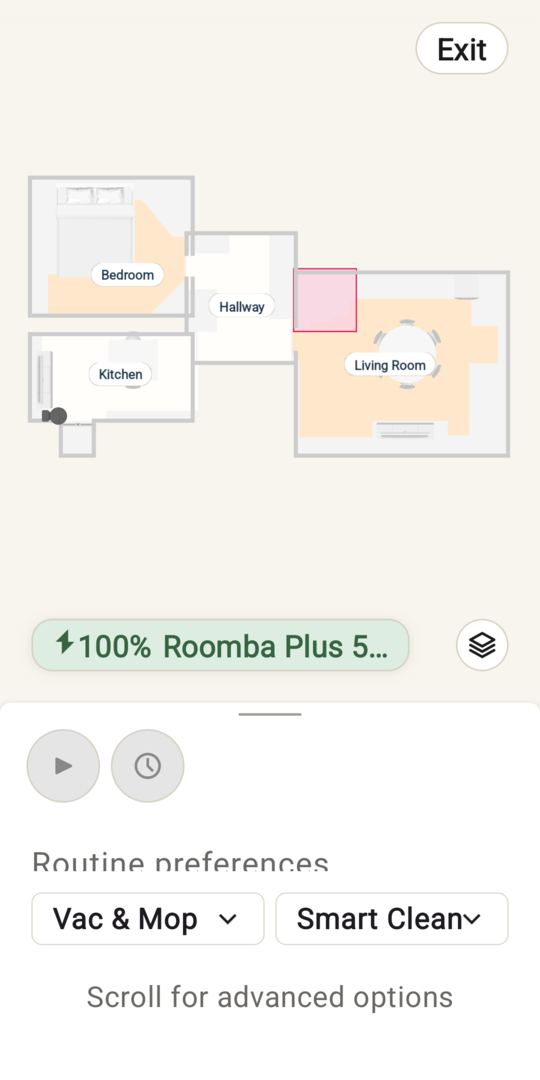
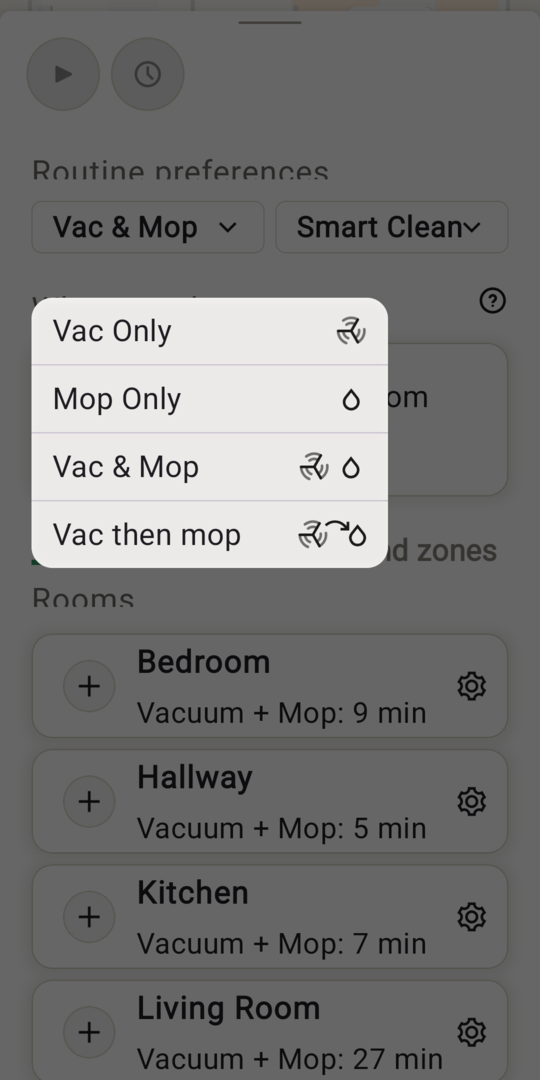
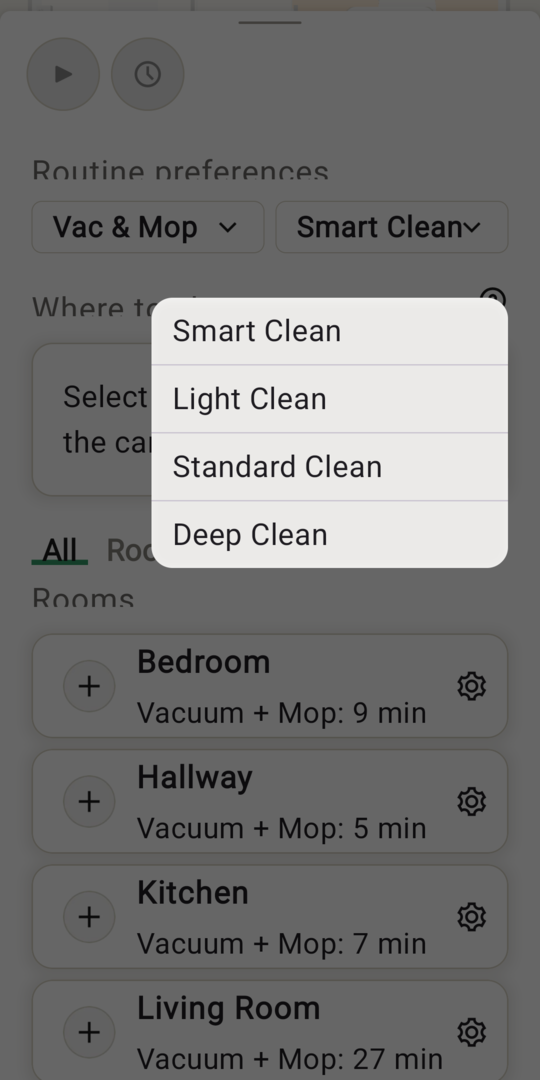
Currently, the main view focuses on offering pre-set routines, from which the robot can be made to perform the most commonly used tasks with a single tap: whether it's a thorough cleaning of the entire apartment or just a light vacuuming in the kitchen.
Only a couple of routines are visible in the main view, which makes the view a bit annoying when I personally use three or four different routines, depending on the situation. But presumably, for most users, the current solution is quite functional.
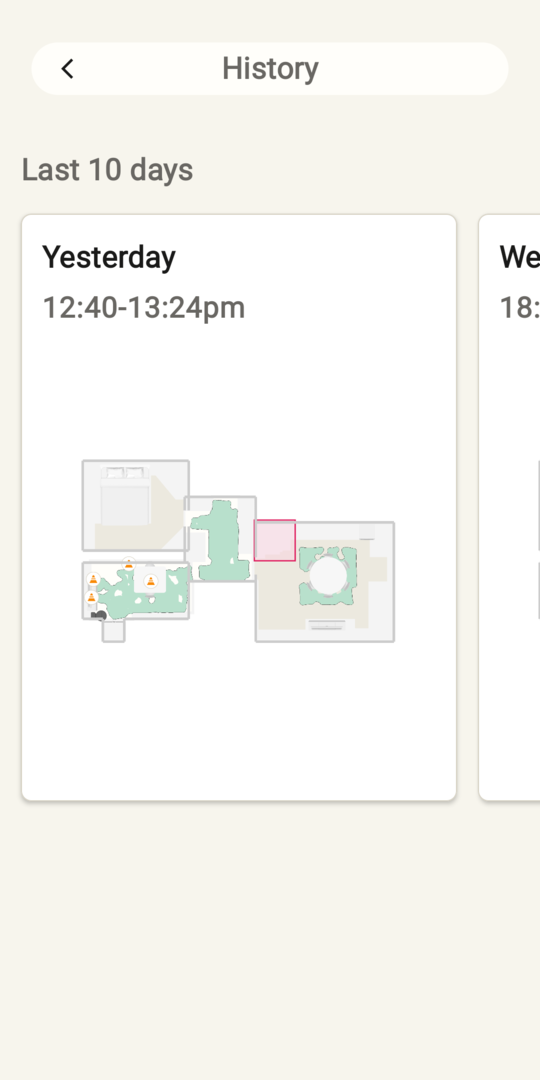
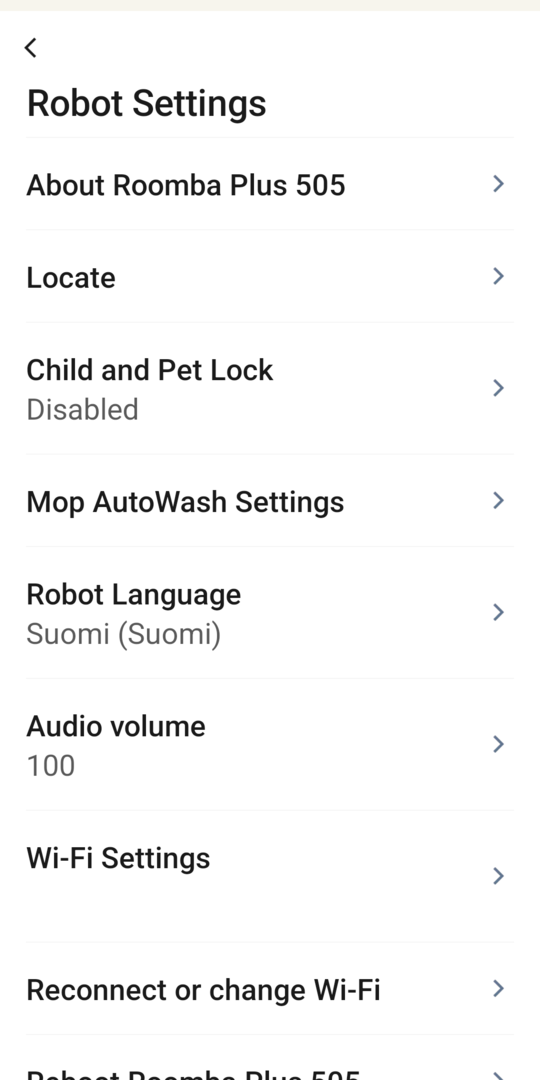
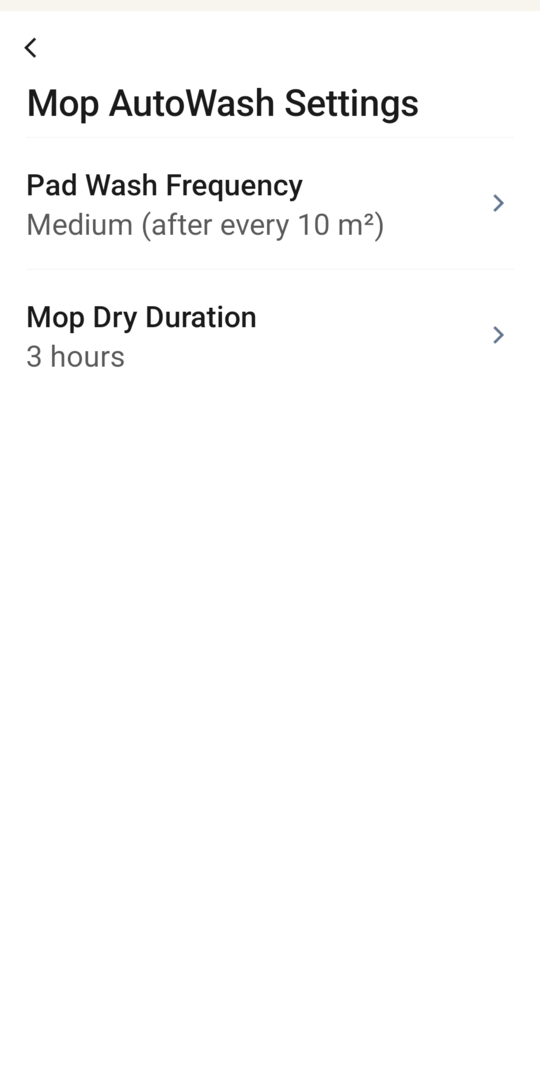
As usual, Roomba does not offer the same level of adjustability in terms of settings as many of its Chinese competitors, but instead, the app's menu structures have aimed for simplicity.
The current philosophy is not entirely successful in my opinion - and the old Roomba app from a few years ago was clearer in terms of usability, in my opinion. At the same time, certain things, such as adjusting the water amount during mopping, are practically completely hidden, and the chosen routine decides on behalf of the user how water is dispensed to the mop.
However, for cleaning, there are quite smart solutions available, such as light basic cleaning, deep cleaning - and also adjustment possibilities for different rooms. Thus, you can create your own default settings for each room - whether they only need to be vacuumed or if mopping is also needed, and how thoroughly each room should be cleaned.
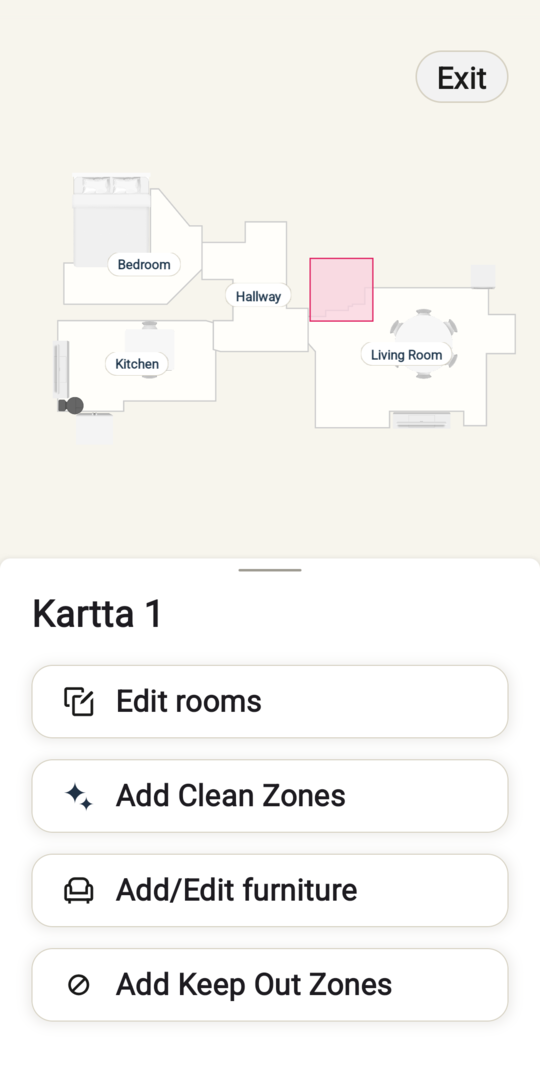
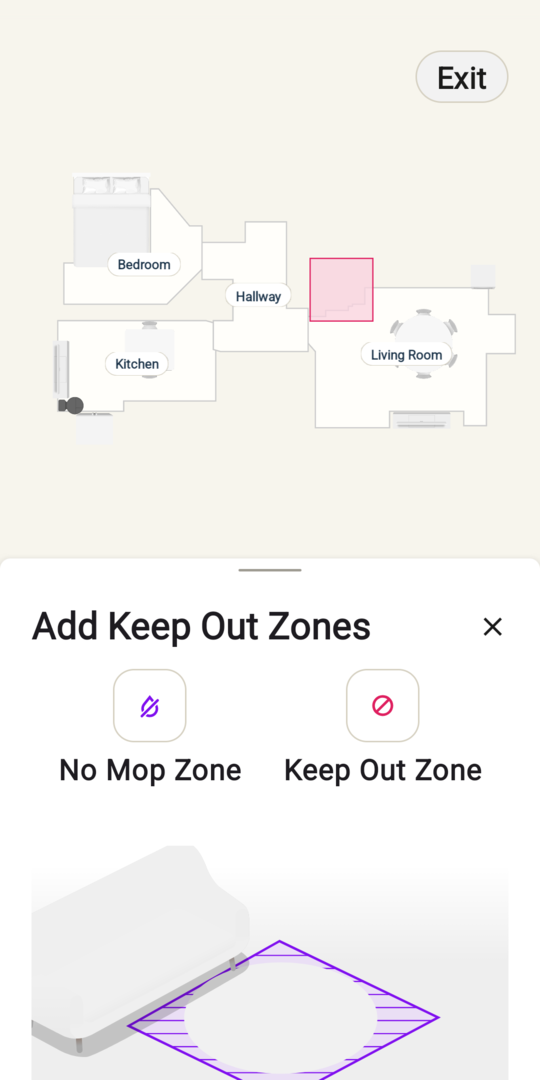
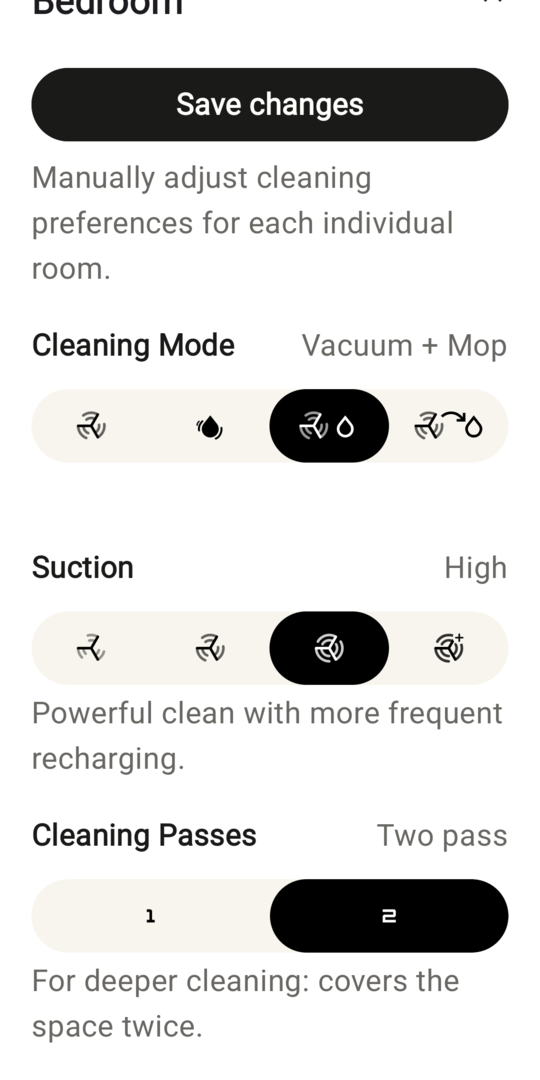
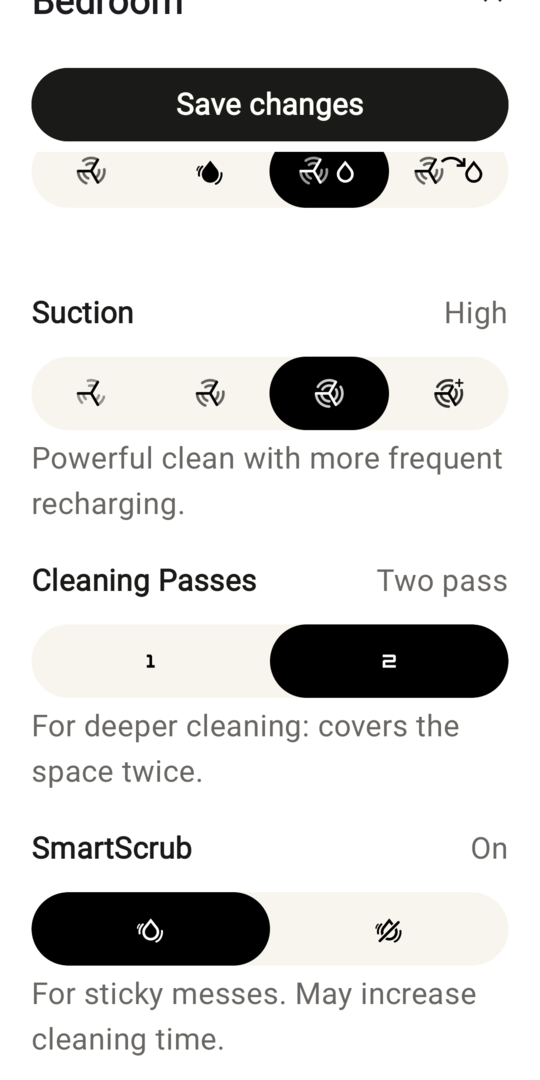
Map editing also follows a very simplified model, offering all basic functions, but presented somewhat crudely and abstractly. Perhaps the most important thing to note is that the default cleaning settings for individual rooms are adjusted through the map editor.
Overall, I was not entirely comfortable with the revamped application: I loved the old iRobot app for its simplicity - and now, in a way, simplicity has been cut back, but without offering all the adjustability that other manufacturers have in their applications.
As a Finn, I'm also very pleased about the fact that iRobot translates its app and its robots' voice commands to several smaller languages, too (like my native Finnish).
Usage
Roomba's daily use does not differ from other robot vacuums in any way. That is, it is meant to be used preferably daily - and not only when the home starts to look dirty. Robot vacuums, generally speaking, are intended to maintain a tidy home, and they may not necessarily clean a completely chaotic apartment in one go, nor is that their purpose.
The most sensible way to use the robot is through scheduling, if one's daily life and routine allow it. If, on the other hand, you regularly work remotely, for example, the robot can be turned on either by pressing the physical button on the robot or via the application, by selecting the desired routine.
After starting, the robot cleans the designated rooms in the desired order. Finally, it returns to its dock, empties its internal dustbin, and begins washing its mop pads clean.
Roomba's soundscape is very typical for a robot vacuum, meaning it's nowhere near as loud as a regular vacuum cleaner, but annoying enough that you wouldn't want to listen to it while at home.
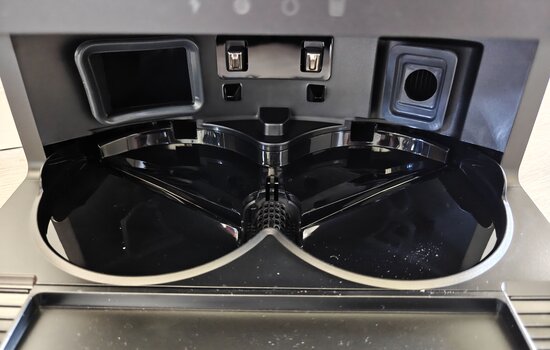
the washbasin in the dock where the mop pads are automatically washed
The biggest noise from Roomba comes when it empties its internal dustbin into the separate dust bag found in the dock. After that, the mop pad cleaning process begins, which lasts a few minutes. Finally, the drying of the compartment takes one to three hours, during which a slight hum can be heard from the dock - so I do not recommend placing the robot in a location where no extra noise is desired.
Roomba's battery life was better than average, and I would estimate that during a workday, it can easily clean an apartment with a floor area of approximately 150m2 with one intermediate charge. The robot can thus charge itself during cleaning if the battery is not sufficient to complete the entire routine on a single charge - and Roomba knows where to resume cleaning after charging the battery.
Obstacle avoidance
The Roomba Plus 505 Combo is now the first Roomba to reach our test bench that features both LiDAR light radar and camera-based obstacle avoidance. This combination is thus exactly the same as what all other significant robot vacuum manufacturers use in their higher-end, intelligently obstacle-avoiding robot vacuums.
But of course, as we've noted over the years, merely having LiDAR and a camera in a robot doesn't mean anything in itself - some robot vacuums are utterly terrible at avoiding obstacles left on the floor despite their technology, while others are truly excellent at avoidance.
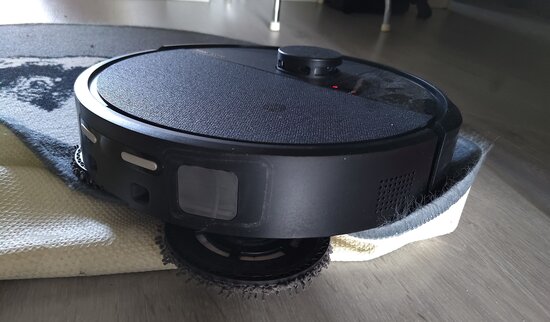
And Roomba actually pleasantly surprised in this area: it wasn't quite among the top contenders of the obstacle-avoiding robots we tested, but clearly better than most. Actually, the only major problem for Roomba was the chrome kitchen chair legs, which I've dubbed "robot killers," and which most other robot vacuums also stumble upon.
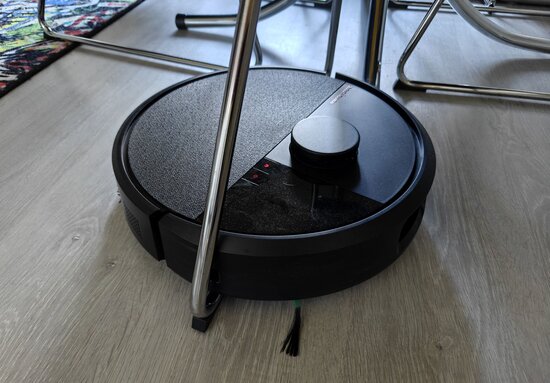

But Roomba handled shoelaces, charger cables, and rugs left on the floor with commendable results. Only a few times had it managed to crumple a light hallway rug so that it couldn't get past it after crumpling, or to ingest a shoelace in the hallway. But during the several-month test period, Roomba was in trouble only very rarely - and the occassional problems were almost always with those kitchen chairs.
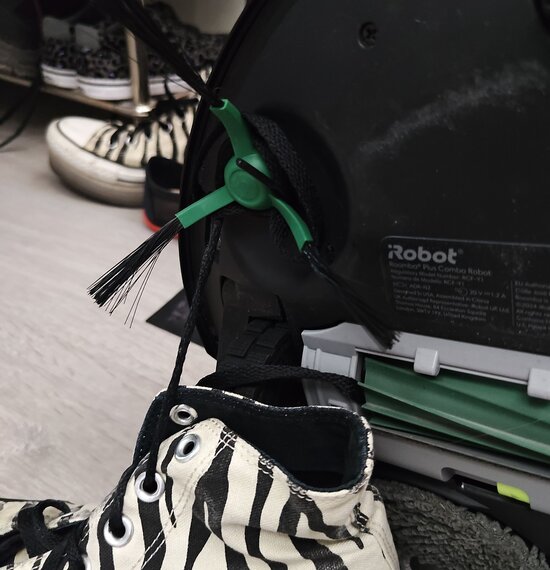
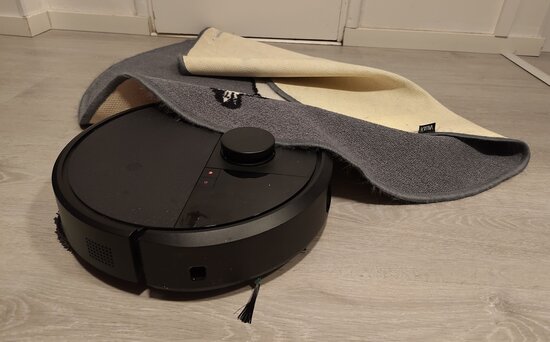
Even with chairs, Roomba actually performed better than most other robot vacuums, as the design of the Roomba 505 Combo+ clearly used the same principle as in a Samsung Jet Bot 90+ AI robot vacuum we reviewed years ago: more power is put into the robot. This means Roomba managed to break free from even bad jams several times just by brute force.
Cleaning result
As for cleaning, Roomba was tested extensively, as the robot cleaned our test location from late autumn through winter, until early spring. And in that regard, the Roomba 505 Combo+ was an excellent case: it managed to collect the grit and leca gravel crumbs accumulated in the hallway, in addition to the usual dust found in corners.
Roomba can lift its mop pads quite well when encountering carpets, and thus it also does not wet carpets or leave dirt from the mop pads on carpet surfaces. But it should be mentioned here that the Roomba 505 Combo+ does not know how to leave its mop pads in its dock - or take them to the dock to wait if they are not needed. So, in this respect, Roomba clearly loses out to its slightly more expensive competitors: since the mops are not automatically detached from the vacuum at all, Roomba is not suitable for plush carpets. The mops dragged along would wet and dirty carpets more than a couple of centimeters thick.
Another observation related to cleaning also concerns mopping: Roomba uses water quite liberally for washing the mop pads after cleaning - clearly more than other robot vacuums I've tested. In addition, the water tanks in the dock are slightly smaller than in most competitor models.
From this, it follows that if Roomba is always instructed to also mop the apartment during vacuuming, the water tanks in the dock must be emptied and refilled more often than in most other robot vacuums implemented with similar technology.
For the same reason, I would schedule the robot to only vacuum during a long vacation, so that cleaning would not stop due to the water tanks emptying or the dirty water tank filling up.
It should also be mentioned that, because of the patents held by iRobot, Roomba is one of the few robot vacuums that recognizes when its internal dustbin is full - and the robot is able to empty its bin during cleaning at the right time, before continuing the cleaning. This makes Roomba an excellent helper for homes with pets that shed a lot of hair.
Roomba's situation..?
News about the weak financial situation of iRobot, Roomba's owner, was reported throughout 2025. The situation naturally worried current and potential buyers of Roomba vacuums - because if the company collapsed, support services and app functionalities might cease.
However, the situation eventually resolved happily for robot owners, though poorly for iRobot's shareholders: the entire iRobot transferred to new owners through debt restructuring. The new owner is practically the same company that has been manufacturing Roombas for years.
In the current situation, Roomba is easy to recommend again, as the company's current ownership structure appears stable. The new owner has also promised that service and warranty will continue as usual for previously purchased Roomba models.
Of course, it can be considered problematic that the previously American iRobot is now also a Chinese-owned company - like almost all other major robot vacuum manufacturers, with the exception of South Korea's Samsung.
Summary
The Roomba 505 Combo+ (aka Roomba Plus 505 Combo, aka Roomba 505 Combo+ AutoWash) was an interesting addition to the wide range of robot vacuums. It doesn't bring anything truly new to modern robot vacuums per se, but it performs its promised functions well and reliably.
Particularly pleasing were its competent obstacle avoidance technology and cleaning results. On the other hand, criticism must be given for the somewhat confusing mobile application and, above all, for the robot's inability to detach its mop pads - making it relatively useless for homes with thick carpets.
Alternatives
There are plenty of alternatives for Roomba. But if we limit realistic alternatives to robot vacuums that offer camera-based obstacle avoidance, automatic mopping, and a self-emptying dustbin, the selection narrows down to higher-end products. And here Roomba is strong, as it has been sold for even under $500/€500 in early 2026, while challenging many Roborock counterparts in terms of features.
As comparisons, I would perhaps highlight the Roborock Qrevo Curv and Roborock Qrevo Edge models, which are essentially the same vacuum, just with a different dock. Their price tag has also recently hovered wallet-friendly below the $500/€500 mark. Compared to these, the Qrevos beat Roomba in terms of adjustability, but Roomba, in turn, performed clearly better in obstacle avoidance - offering more reliable daily use.
Additionally, I'd like to remind that there are huge price fluctuations in robot vacuums constantly - so, actively look for discounts.
Pros
- Good cleaning result
- Very good language support, even for smaller languages
- Very good obstacle avoidance for its price range
- Suitable for pet homes
Cons
- Cannot leave mops in the dock automatically - therefore poorly suited for thick carpets
- Somewhat confusing mobile application
- Uses a lot of water for mop washing compared to counterparts
Stars

However, the biggest headache when reviewing Roomba was its fluctuating price: the robot's price range was around $700/€800 at the beginning of our test period, which would be far too much for this particular model. But the price dropped to around $500/€500 over the winter, at which point Roomba 505 became competitive again in terms of price-quality ratio.
At the time of our review, Roomba's price has been pretty constantly set at $500/€500, so we've deciding our star rating based on that price level. And with a price tag under €500/$500, Roomba Plus 505 Combo is, in our opinion, a very good robot vacuum.
Written by: Petteri Pyyny @ 13 Apr 2026 11:21
